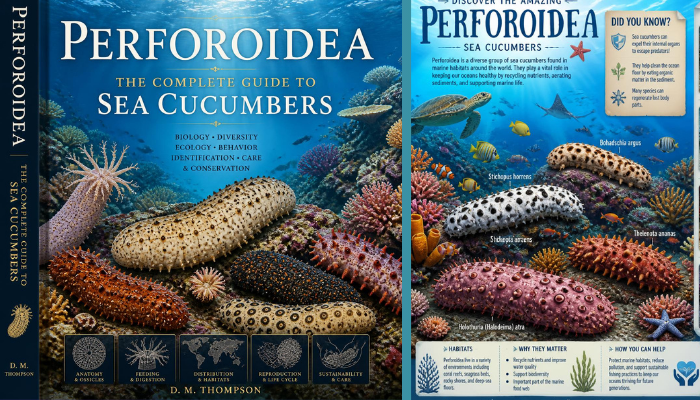

Perforoidea represents a fascinating superfamily of sea cucumbers that inhabit our ocean floors. These remarkable marine invertebrates belong to the class Holothuroidea and play crucial roles in maintaining healthy ocean ecosystems. Unlike their more commonly known relatives, Perforoidea species have developed unique adaptations that allow them to thrive in various marine environments.
These creatures might not win any beauty contests, but their ecological significance cannot be overstated. They act as nature’s cleanup crew, processing organic matter on the seafloor and recycling nutrients back into the marine food web. Their elongated, soft bodies contain specialized feeding structures that help them extract nutrition from sediment and detritus.
Scientists have identified multiple families within Perforoidea, each exhibiting distinct characteristics and behaviors. Understanding these organisms helps researchers better comprehend ocean health and the intricate relationships between marine species.
Physical Characteristics and Anatomy
Perforoidea sea cucumbers display a range of physical features that distinguish them from other echinoderms. Their bodies typically measure between 10 to 30 centimeters in length, though some species can grow considerably larger. The body wall consists of a leathery outer layer that protects internal organs while maintaining flexibility.
One of the most distinctive features is their feeding apparatus. Most Perforoidea species possess specialized tentacles surrounding their mouth, which they use to gather food particles from the sediment. These tentacles can vary in number and complexity depending on the species.
Their coloration ranges from pale cream to dark brown, often helping them blend seamlessly with their surroundings. Some species exhibit patterns or markings that may serve camouflage purposes or species recognition functions.
The internal anatomy includes a water vascular system characteristic of all echinoderms. This hydraulic system controls their tube feet, which they use for locomotion and anchoring to surfaces. Their respiratory trees allow them to extract oxygen from seawater pumped through their cloaca.
Habitat and Geographic Distribution
These sea cucumbers inhabit diverse marine environments across the globe. You can find Perforoidea species from shallow coastal waters to the deep ocean floor, though many prefer depths between 100 to 2000 meters. Their distribution spans tropical, temperate, and even polar regions, demonstrating remarkable adaptability.
Most species favor soft sediment substrates where they can burrow and feed efficiently. Sandy or muddy bottoms rich in organic matter provide ideal conditions for their deposit-feeding lifestyle. Some species have adapted to rocky environments or coral reef ecosystems, showcasing the superfamily’s versatility.
Water temperature plays a significant role in determining their distribution patterns. While some species tolerate wide temperature ranges, others remain restricted to specific thermal zones. Ocean currents influence their larval dispersal, affecting population connectivity across different regions.
Human activities have impacted their natural habitats in various ways. Bottom trawling, pollution, and climate change pose threats to these populations. Conservation efforts increasingly recognize the importance of protecting sea cucumber habitats to maintain ecosystem balance.
Feeding Behavior and Diet
Perforoidea sea cucumbers are primarily deposit feeders, meaning they consume organic matter found in sediment. Their feeding strategy involves ingesting large quantities of sand or mud, extracting nutritious particles, and expelling the processed material back onto the seafloor.
The feeding process begins with their oral tentacles, which sweep across the substrate collecting food particles. These tentacles possess sticky mucus that traps microscopic organisms, detritus, and organic fragments. The captured material then moves toward the mouth for ingestion.
Their diet consists mainly of bacteria, protozoa, diatoms, and decomposing organic matter. This broad diet allows them to exploit food sources that many other organisms cannot utilize effectively. Some species show preferences for particular particle sizes or organic content levels.
The rate at which they process sediment is truly impressive. A single individual can process several kilograms of sediment annually, essentially bioturbating the seafloor and improving oxygen penetration into deeper sediment layers. This activity enhances nutrient cycling and supports diverse microbial communities.
Their feeding activities create distinct trails and patterns on the ocean floor. Researchers can identify areas of high sea cucumber activity by observing these bioturbation signatures, which appear as mounds and depressions in the sediment surface.
Reproduction and Life Cycle
The reproductive strategies of Perforoidea species involve both sexual and asexual methods. Most reproduce sexually through broadcast spawning, releasing eggs and sperm into the water column where fertilization occurs. Environmental cues like temperature changes or lunar cycles often trigger these spawning events.
Fertilized eggs develop into free-swimming larvae that drift with ocean currents. This larval stage, called the auricularia, feeds on phytoplankton while undergoing several developmental transformations. The larval period can last from weeks to months, depending on species and environmental conditions.
Eventually, larvae metamorphose into juvenile sea cucumbers and settle onto the seafloor. Settlement site selection is crucial for survival, as juveniles need appropriate substrate and food availability. Many species show preferences for specific settlement habitats.
Some Perforoidea species can reproduce asexually through fission, splitting their bodies into two or more parts that each regenerate into complete individuals. This remarkable ability helps populations recover from disturbances and colonize new areas.
Sexual maturity arrives at different ages depending on the species and environmental conditions. Growth rates vary considerably, with some species reaching reproductive size within two years while others require five years or more.
Ecological Importance and Ecosystem Services
These sea cucumbers provide invaluable ecosystem services that benefit ocean health. Their sediment processing activities improve water quality by removing excess organic matter that might otherwise deplete oxygen levels. This bioturbation also prevents the formation of anoxic zones harmful to other marine life.
By recycling nutrients, they make essential elements available to other organisms in the food web. Nitrogen, phosphorus, and carbon all cycle through their digestive systems, returning to the environment in forms more accessible to bacteria and phytoplankton.
Perforoidea species serve as prey for various predators including fish, crabs, and sea stars. Their presence supports higher trophic levels and contributes to overall biodiversity. Some fish species specifically target sea cucumbers as a primary food source.
Their burrowing activities create microhabitats that other small organisms utilize. The mounds and depressions they form provide shelter and feeding opportunities for amphipods, polychaetes, and other invertebrates. This habitat modification increases local species diversity.
In areas where sea cucumber populations have declined, researchers have observed corresponding changes in sediment chemistry and community composition. These observations underscore their keystone role in maintaining ecosystem function and stability.
Threats and Conservation Status
Several Perforoidea species face increasing pressure from commercial harvesting. The global sea cucumber fishery has expanded dramatically, driven by demand in Asian markets where they are consumed as food and traditional medicine. Overfishing has depleted populations in many regions.
Habitat degradation from coastal development, pollution, and destructive fishing practices threatens their survival. Bottom trawling physically damages seafloor habitats and directly kills sea cucumbers caught as bycatch. Chemical pollutants can accumulate in their tissues, affecting health and reproduction.
Climate change poses multiple challenges. Ocean warming alters their metabolic rates and may shift their geographic ranges. Ocean acidification could affect larval development and calcified body structures. Changes in ocean currents may disrupt larval dispersal patterns.
Many countries have implemented regulations to manage sea cucumber fisheries, including size limits, seasonal closures, and harvest quotas. However, enforcement remains challenging, especially in remote areas. Illegal fishing continues to undermine conservation efforts.
Research into aquaculture techniques offers potential solutions for meeting market demand while reducing pressure on wild populations. Several species have been successfully cultured in hatcheries, though commercial-scale production faces economic and technical hurdles.
Research and Future Perspectives
Scientific interest in Perforoidea continues to grow as researchers recognize their ecological importance and potential applications. Studies using DNA analysis have revealed previously unknown species and clarified evolutionary relationships within the superfamily. These genetic tools help identify populations needing conservation priority.
Researchers are investigating bioactive compounds found in sea cucumber tissues. Some species produce unique chemicals with potential pharmaceutical applications, including anti-inflammatory, antimicrobial, and anticancer properties. This bioprospecting could provide economic incentives for conservation.
Long-term monitoring programs track population trends and assess the effectiveness of management measures. These efforts require collaboration between scientists, fisheries managers, and local communities. Citizen science initiatives increasingly contribute valuable data on distribution and abundance.
Advanced technologies like remotely operated vehicles and autonomous underwater vehicles enable researchers to study deep-sea species that were previously inaccessible. These observations reveal new behaviors and ecological interactions that enhance our understanding of marine ecosystems.
Future research will likely focus on understanding how Perforoidea species respond to environmental change. Predicting their resilience to multiple stressors requires integrating knowledge from physiology, ecology, and oceanography. Such information is essential for developing effective conservation strategies.
The study of these remarkable creatures reminds us how much remains unknown about ocean life. Every research expedition discovers new species or unexpected behaviors, highlighting the importance of protecting marine biodiversity. As we learn more about Perforoidea, we gain deeper appreciation for the complex web of life that sustains our oceans and ultimately supports human well-being.
.